Find the Cause First. Then Treat It. – Dr. Dhabhai’s Skin Clinic, Malviya Nagar
Hair on the pillow. Hair in the drain. A part line that keeps getting wider every month.
Most people respond by switching shampoos. That rarely works, because hair fall is a symptom, not a diagnosis. Two patients can lose hair in exactly the same way for completely different reasons – and the treatment that helps one may do nothing at all for the other.
That is why every consultation at Dr. Dhabhai’s Skin Clinic begins with an examination, not a prescription. Dr. Ravindra Dhabhai assesses your scalp, your shedding pattern and your medical background before discussing any treatment option – whether that turns out to be medical management, PRP, scalp treatment or a hair transplant assessment.
If you have been searching for hair loss treatment in Jaipur and want a dermatologist’s opinion rather than another product to try, this is where to start.
Consult Dr. Ravindra Dhabhai for expert hair & scalp diagnosis.
Everybody sheds hair daily. The concern begins when the loss outpaces the regrowth, and the difference usually shows up in the mirror before it shows up on the floor.
Catching these signs early usually means more of your existing hair can be preserved. Waiting rarely improves the picture.
Hair loss is a symptom shared by many conditions. Working out which one you have is the entire point of the consultation – your pattern of loss, scalp condition, family history and general health each narrow the possibilities.
The most common form in both men and women. It develops slowly, follows a recognisable pattern, and tends to progress if left unaddressed.
A large batch of hair shifts into the resting phase at once, often two to three months after a trigger – a fever or infection, surgery, childbirth, crash dieting, iron or vitamin deficiency, thyroid changes or a period of severe stress. The shedding can be dramatic and is often reversible once the trigger is identified.
An autoimmune condition in which the immune system targets hair follicles, producing sharply defined smooth patches. It behaves differently from pattern loss and needs a different approach entirely.
Long-standing dandruff, seborrhoeic dermatitis, psoriasis or fungal infection create inflammation and scratching. An irritated scalp is not a good environment for hair to hold.
Restrictive dieting, low iron, protein or vitamin D, disturbed sleep and prolonged stress can all interfere with the normal growth cycle.
Thyroid imbalance, PCOS, anaemia, post-illness recovery, and certain medications are all recognised contributors.
Because these conditions look similar from the outside but respond to very different treatments, treating blindly usually costs time – and lost time is lost hair.
Nothing here is applied by default. What is recommended depends on your diagnosis, the stage you are at, the condition of your scalp and what you are realistically able to follow through with.
Prescription treatment forms the backbone of care for most types of hair fall. Topical solutions, oral medication, correction of identified deficiencies and treatment of any underlying medical condition may all form part of the plan.
These treatments work with your hair cycle rather than against it, which is why they are prescribed and reviewed under supervision rather than picked off a shelf.
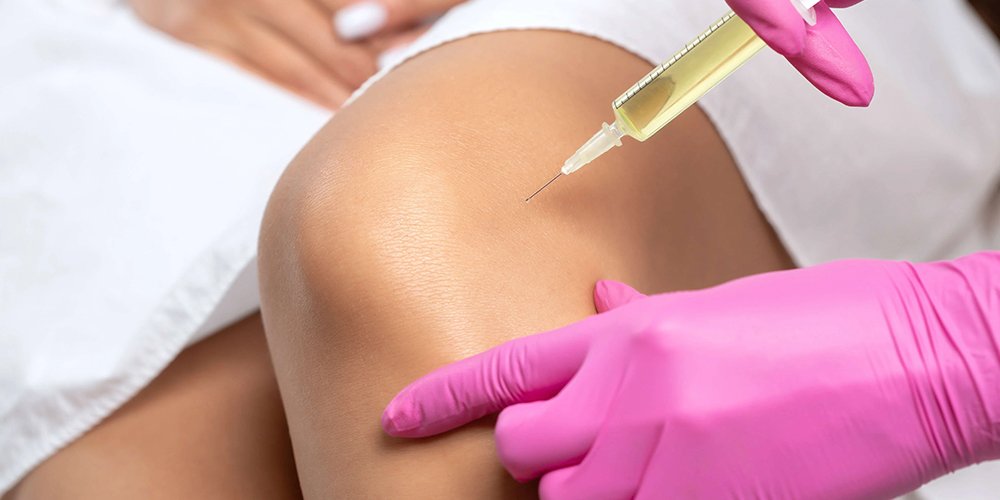
Platelet-Rich Plasma is a non-surgical, in-clinic procedure used for selected types of hair loss.
A small quantity of your blood is drawn and spun in a centrifuge to separate and concentrate the platelet-rich portion. That concentrate is then delivered into the affected areas of the scalp in a session that fits comfortably into a normal day.
Session count and spacing differ from person to person. Response varies too, which is why suitability is assessed before the first session rather than assumed. PRP hair treatment in Jaipur is offered here as one option within a plan – not as a standalone promise.
Male pattern hair loss usually announces itself in one of three ways: temples moving back, a thinning circle at the crown, or hair that simply refuses to look as dense as it once did.
Treatment is planned around the stage you present at. Early recession and mid-stage crown thinning often respond well to medical management, sometimes supported by PRP. More advanced loss with a stable donor area may be better addressed through hair transplantation.
The earlier the stage, the more options remain on the table – this is the single biggest advantage a patient can give themselves.
Female hair loss usually looks different. Instead of bald areas, most women notice volume dropping, the ponytail getting thinner, and the parting widening while the front hairline stays intact.
The causes are frequently layered – hormonal factors, iron or thyroid issues, post-pregnancy shedding, chronic stress or female pattern loss, often more than one at a time. Investigation therefore matters as much as treatment.
Female hair loss treatment in Jaipur is planned only after those contributors are identified, because treating the visible thinning while ignoring an underlying deficiency tends to produce short-lived results.
Coin-sized bald patches that appear suddenly on a smooth, healthy-looking scalp point towards alopecia areata.
It is an autoimmune condition, not a hygiene or product problem, and management depends on how many patches there are, where they sit, how quickly they are spreading and whether eyebrows, beard or body hair are involved. It responds to dermatological treatment, and prompt assessment helps.
Hair grows out of skin. When that skin is inflamed, flaking or infected, hair quality suffers.
Persistent dandruff, itching, scaling, greasiness or soreness deserves proper diagnosis, since seborrhoeic dermatitis, psoriasis and fungal infection all flake but need different treatment. Bringing the scalp back to a calm baseline is often the first step in any hair-fall plan.
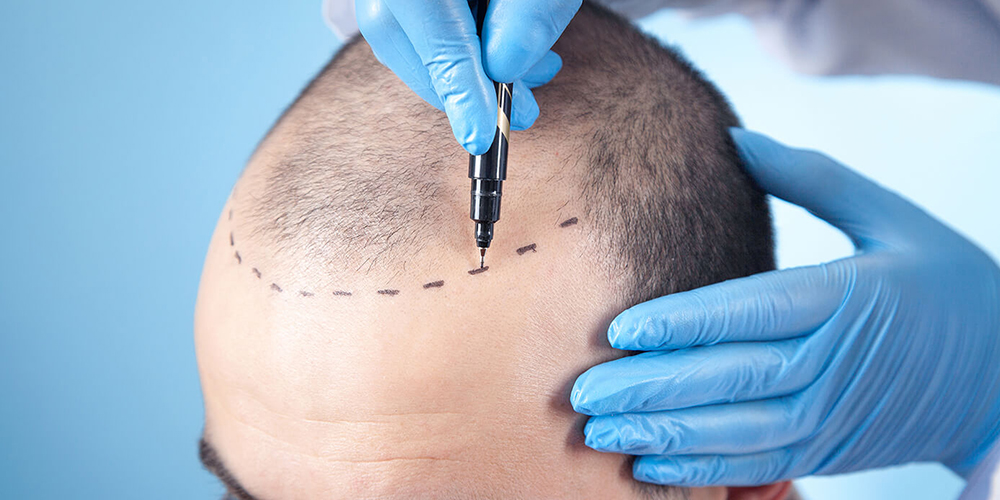
For permanent, pattern-type loss that has reached an advanced stage, hair transplantation moves follicles from a genetically resistant donor zone into the thinning or bald areas.
A consultation exists to answer one question honestly: would surgery genuinely help you, or would non-surgical treatment serve you better right now?
Your scalp and hair are examined directly – pattern of loss, density, hair calibre, scalp condition and the state of the donor area.
When shedding began, how it progressed, family history, recent illness/surgery, diet, stress, medication and related symptoms. Blood investigations advised where they change the plan.
You are told the likely diagnosis, appropriate treatments, what each involves and what results are reasonable to expect – including where expectations should be tempered.
Hair grows slowly, so progress is judged over months, not days. Follow-up visits track response and allow the plan to be modified if results are not on track.
Care is led by Dr. Ravindra Dhabhai, trained in clinical dermatology, dermatosurgery and aesthetic procedures.
The same package is not handed to everyone who walks in. What you are offered depends on what your examination shows.
Medical treatment, PRP, scalp disorder management and hair transplant assessment – so the recommendation is based on your condition rather than the one service available.
Pattern loss in men and diffuse thinning in women present differently and are assessed differently.
If your condition is unlikely to respond well to a particular treatment, you will be told that before you spend money on it.
Easily reachable from across Jaipur.
Book a consultation if:
Hair that has been lost for a long time is harder to recover than hair that is currently thinning. The earlier the assessment, the more you have left to work with.
There isn’t one. The right treatment depends entirely on why your hair is falling – pattern loss, telogen effluvium, alopecia areata and scalp disease each require a different approach. Anyone recommending a single treatment for all hair fall is skipping the diagnosis.
In most cases, yes. Medical treatment, correction of underlying deficiencies, scalp treatment and procedures such as PRP handle a large proportion of hair loss. Transplantation is generally reserved for advanced, stable pattern loss with adequate donor hair.
PRP is used for selected types of hair loss and response varies between individuals. It works best as part of a wider plan rather than on its own, and suitability should be assessed before starting – which is why a consultation comes first.
It depends on your diagnosis, how much thinning is present and how you respond along the way. A schedule is suggested after assessment rather than quoted upfront.
Ongoing scalp inflammation and the scratching that comes with it can increase shedding. Treating the underlying scalp condition is often an important part of controlling hair fall.
Yes. Many causes of hair loss in women – hormonal, nutritional, thyroid-related, post-pregnancy or pattern-type – can be evaluated and managed. Identifying the contributing factors is what determines the treatment.
When you first notice persistent shedding, reduced density, a widening parting, a receding hairline or a bald patch. Waiting until the loss is obvious to everyone else narrows your options.
Hair grows around a centimetre a month, so change is measured over months. The realistic timeline depends on the condition and treatment, and will be explained to you at the consultation rather than promised in advance.
Most patients don’t. Transplantation suits a specific group – advanced, stable pattern loss with a strong donor area. A dermatologist can tell you where you actually stand.
For conditions like pattern hair loss, which are ongoing by nature, maintenance is usually part of the plan. Temporary causes such as telogen effluvium often settle once the trigger is corrected. This is discussed openly during your consultation.
Persistent hair fall deserves a diagnosis, not another bottle from the pharmacy shelf.
At Dr. Dhabhai’s Skin Clinic, your hair and scalp are assessed properly and your treatment plan is built around what is actually causing the loss.
Dr. Dhabhai’s Skin Clinic
Above ICICI Bank, 1st Floor, Girdhar Marg
Malviya Nagar, Jaipur, Rajasthan – 302017