Breakouts settle down eventually. The marks they leave behind often do not. Long after the last pimple has healed, the pitting, shadowing and uneven surface it caused can still be the first thing you notice in the mirror.
Dr. Dhabhai Skin Clinic offers acne scar removal in Jaipur that begins with diagnosis rather than a fixed menu of procedures. Every plan is put together by a dermatologist and reflects three things: the kind of scarring you have, how your skin behaves, and what you actually want to change about it.
This matters because acne scars are not a single condition. Shallow surface dents, widened pores, narrow pits, sharp-walled craters and soft rolling waves all form differently and all respond differently. A treatment that transforms one type may do very little for another, which is why lasting improvement usually comes from a considered combination rather than a single machine.
When a breakout becomes inflamed enough to damage the deeper structural layers of the skin, the healing process does not always restore the surface neatly. The skin repairs itself with collagen — and if it produces too little, the area sinks; if it produces too much, the area lifts. That imbalance is what we recognise as an acne scar.
Most patients arrive with more than one pattern at once, which is precisely why the depth and distribution need to be assessed in person before any treatment is planned.
Depending on what the assessment shows, your plan at Dr. Dhabhai Skin Clinic may involve one procedure or several used in sequence.
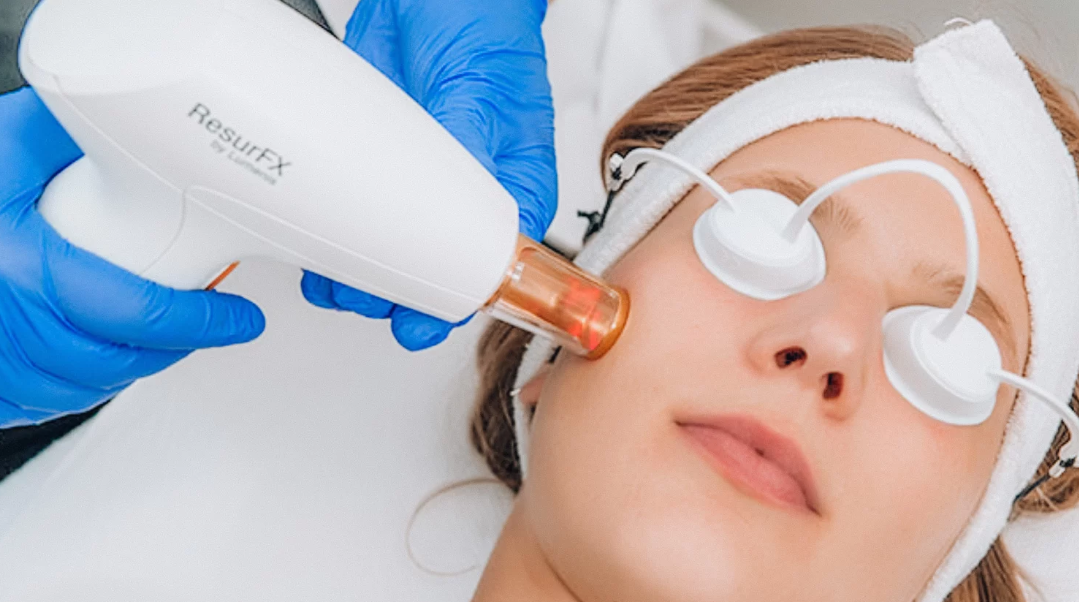
Fractional lasers treat the skin in thousands of microscopic columns, leaving the surrounding tissue untouched so recovery is quicker. Those controlled injuries trigger a wave of collagen remodelling that gradually refines the surface.
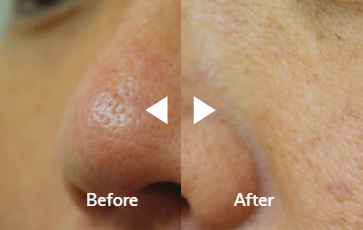
It is often considered for depressed scarring, enlarged pores and generalised roughness of texture.
Fine medical needles create thousands of tiny channels through the skin, which activates the body’s own wound-repair pathway and stimulates new collagen without removing the outer layer.
Microneedling can be useful for mild to moderate scarring and for evening out overall skin texture.
MNRF adds radiofrequency energy delivered through insulated needles directly into the dermis. Because the heat is placed at a controlled depth, it drives collagen remodelling more deeply than needling alone.
This makes it a frequent choice for selected rolling and boxcar scars.
Rolling scars are usually tethered from underneath by bands of fibrous tissue pulling the surface down. Subcision releases those bands with a fine instrument, allowing the depression to rise towards the level of the surrounding skin.
Where clinically appropriate, subcision is combined with resurfacing procedures for a fuller result.
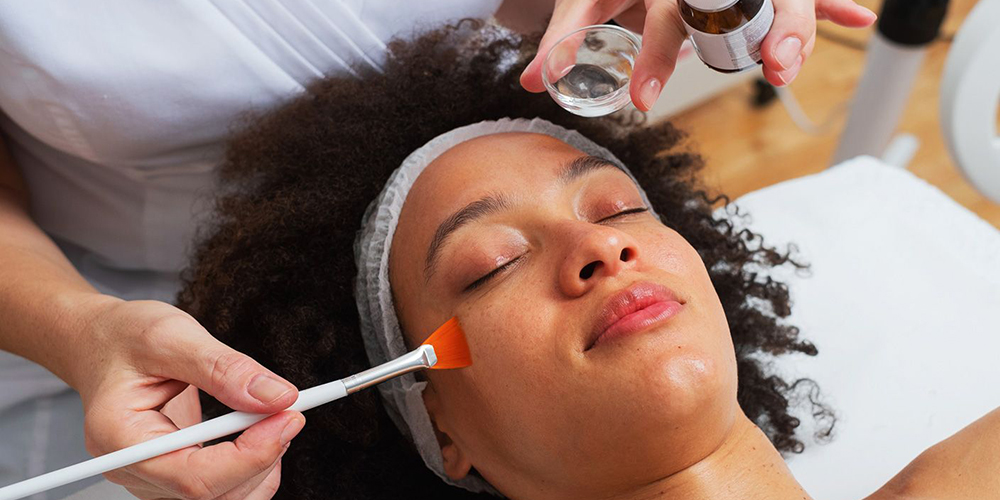
Carefully selected peels can refine superficial irregularities and help lighten post-acne pigmentation. The agent used and its strength are matched to your skin type, sensitivity and the concern being treated.
CROSS stands for Chemical Reconstruction of Skin Scars. A high-strength trichloroacetic acid solution is applied with precision into the base of individual scars, deliberately provoking a repair response that builds collagen from within the pit.
It is generally reserved for narrow, deep or ice-pick scarring.
There is no default answer. The recommendation depends on a combination of factors, including:
At the consultation your dermatologist examines the skin directly and builds a plan around what is actually there.
Good scar treatment depends far more on accurate reading of the scar than on the equipment used. Our approach stays dermatologist-led from assessment through aftercare.
The aim is steady, natural-looking refinement of skin texture, delivered at a pace your skin can tolerate safely.
The session starts with an examination of your scarring and a conversation about what bothers you most. Active acne, pigmentation, previous procedures, relevant medical history and how reactive your skin tends to be all feed into the assessment.
Because treatments stimulate collagen rebuild, visible change is progressive.
This varies considerably between patients. Lighter, more uniform scarring may respond within a small number of sessions, while deep or mixed scarring commonly needs a longer course or a staged combination of procedures. A realistic session count can be given once your skin has been examined.
These procedures are intended to improve the depth, texture and visibility of scars — not to erase them altogether, and any clinic promising complete removal is overstating what dermatology can deliver.
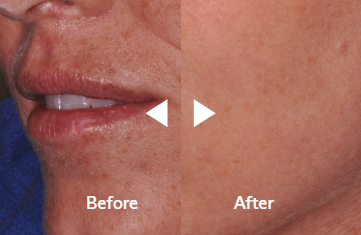
How much improvement is achievable depends on the scar type, severity, healing response and tailored plan. Combination protocols generally outperform single treatments.
Skin of colour carries a greater tendency towards post-inflammatory hyperpigmentation (PIH) after energy-based or ablative procedures.
Energy settings, treatment depth, session spacing and the aftercare regimen therefore have to be adjusted rather than copied from generic protocols.
A dermatologist-led plan keeps that pigmentation risk in view while still working towards meaningful textural improvement.
Results build gradually as collagen remodelling continues for months. Patients are asked to follow:
Individual results vary based on healing response.
That depends entirely on your scar type. Ice-pick, boxcar and rolling scars each respond to different techniques. After examining your skin, a dermatologist may suggest fractional laser, MNRF, subcision, TCA CROSS, chemical peels — or a planned combination of them.
Sensation differs by procedure. For most acne scar treatments a topical anaesthetic cream is applied in advance, which keeps the session comfortable for the majority of patients.
Fractional laser can improve selected scar types by stimulating collagen remodelling. Whether it suits you specifically depends on your scarring, your skin type and a clinical assessment.
Improvement is gradual. Some patients notice a difference within a few weeks, while collagen-driven change typically continues developing over several months.
Yes. Scars that have been present for years remain treatable, though the technique chosen and the extent of improvement will depend on their type and depth.
A treated scar does not usually relapse, but fresh inflammatory acne can create new scarring. Bringing active acne under control is therefore an essential part of preventing further damage.
Cost depends on the procedure, the number of sessions required, the size of the area treated and the severity of scarring. An accurate plan and estimate can be discussed once a dermatologist has assessed your skin.
If acne has left your skin looking uneven, textured or shadowed, a properly matched dermatology plan can make a visible difference to how those marks appear.
Visit Dr. Dhabhai Skin Clinic for a consultation and find out which options for acne scar removal in Jaipur are suited to your scar type and skin condition.