

HAIR & SCALP / PATIENT GUIDE
Hair regrowth on bald spots.
Alopecia areata and male pattern baldness need different approaches. Understand the cause, your options and realistic regrowth timelines.

DIAGNOSIS BEFORE TREATMENT
A different cause. A different plan.
A smooth round patch and a slowly changing hairline may need different treatment. A dermatologist can help establish what is causing your hair loss.
THE SHORT ANSWER
The right diagnosis comes before fast results.
Regrowth depends on the cause, follicle health and treatment response. There is no reliable way to fill a bald patch in a few days, and results cannot be guaranteed.
There’s a particular kind of panic that sets in when you find a bald spot you didn’t know was there.
Maybe your barber paused mid-trim and said, “Did you know you have a patch here?” Maybe you caught the back of your head in a lift mirror. Or maybe it’s been quieter than that: a hairline that seems to sit a little higher in every photo, or a crown that’s started to shine under the bathroom light.
Either way, the first question is almost always the same. Can I get this hair back, and how quickly?
The honest answer is that it depends on what’s causing it. And two of the most common culprits, alopecia areata and male pattern baldness, behave very differently.
A smooth, round patch that seems to appear overnight is often alopecia areata, where your own immune system is involved. A slow, steady retreat at the temples or thinning at the crown is usually male pattern baldness.
That difference matters more than anything else in this article. What helps one can do almost nothing for the other. So before you think about how to regrow hair on bald spots, you need to know which kind of bald spot you’re dealing with.
Why Do Bald Spots Appear on the Scalp?
Every hair on your head goes through a cycle. It grows, rests, falls out and gets replaced. A bald spot forms when something interrupts that cycle, or when the follicle simply stops producing a healthy hair.
There are plenty of possible reasons, but alopecia areata and androgenetic alopecia (the medical name for male pattern baldness) are two of the biggest.
Alopecia Areata: Sudden, Patchy Hair Loss
Think of alopecia areata as a case of mistaken identity. Your immune system, which is meant to protect you, starts treating your hair follicles as a threat and switches them off.
What you usually see is a round or oval patch that turns up fairly quickly. The skin in the middle tends to look clean and smooth. No redness, no flaking, no scarring.
Some people get one patch and that’s it. Others find two or three. It can also show up in the beard, eyebrows or elsewhere on the body, which is often the first hint that this isn’t ordinary hair fall.
Here’s the reassuring part: the follicles are usually still alive underneath, just paused. That means hair can grow back. The frustrating part is that patches can return later, even after they’ve fully filled in.
Male Pattern Baldness: Gradual Hair Thinning
Male pattern baldness is a slower story, and it’s written largely in your genes.
Some men inherit hair follicles that are sensitive to dihydrotestosterone, or DHT, a hormone the body makes from testosterone. Over the years, DHT causes those follicles to shrink. Each new hair comes in a bit finer and a bit shorter than the last, until some follicles barely produce anything visible.
It usually starts at the temples, along the front hairline or at the crown. You rarely wake up and notice it one morning. It’s more of a gradual “has my forehead always been this big?” realisation.
Because it moves slowly, treatment is mainly about two things: slowing the loss down and helping the hair you still have grow thicker.
How to Regrow Hair on Bald Spots Caused by Alopecia Areata
There’s no single treatment for everyone. Your dermatologist will look at how many patches you have, how fast they’re spreading, how old you are and whether hair elsewhere on your body is affected.
1. Intralesional Corticosteroid Injections
If you’re an adult with just a few patches, this is often where treatment starts.
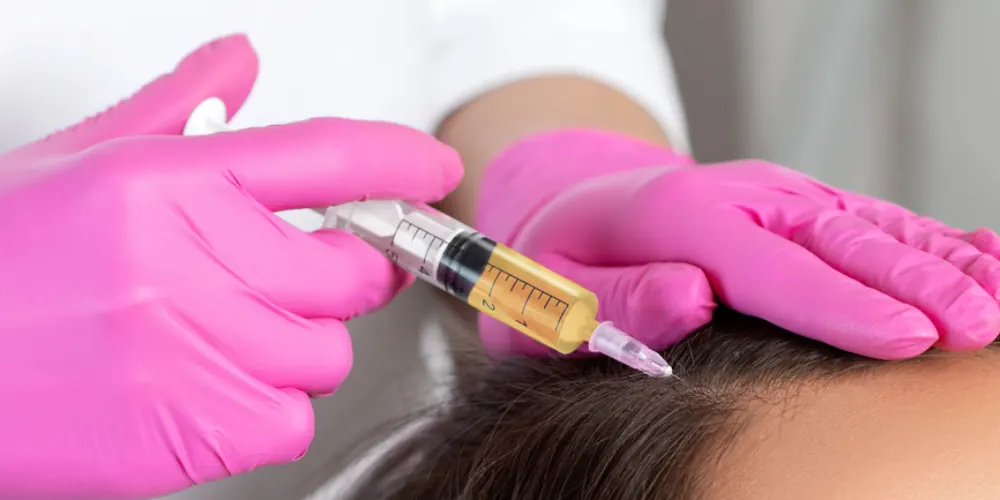
The dermatologist injects a small amount of a corticosteroid, usually triamcinolone, right into the bald patch. The steroid calms the immune reaction around the follicles, and in many people that’s enough to let hair start growing again.
Injections are usually given every few weeks. When they work, you might spot fine new hairs within about three months.
It does sting a little. Some people also notice the skin thinning slightly or small dents forming where the injections went in.
TheAmerican Academy of Dermatology describes these injections as an effective option for limited, patchy alopecia areata.
2. Topical Corticosteroids
Not everyone is keen on needles, and injections aren’t always suitable for children. In those cases, a prescription steroid lotion, solution or cream may be used instead.
These help bring down the inflammation around the affected follicles.
They still need proper supervision, though. Using them for too long or the wrong way can thin the skin and cause other problems.
3. Topical Immunotherapy
This one sounds a bit odd at first. For alopecia areata that’s widespread or stubborn, a dermatologist may deliberately cause a mild allergic reaction on the scalp.
They do this by carefully applying a chemical such as diphenylcyclopropenone (DPCP). The controlled reaction seems to distract the immune system and change what’s happening around the follicles, which can help hair return in some people.
It’s a slow process, usually needing repeated sessions over several months. Itching, eczema, blistering and patches of lighter or darker skin can happen along the way.
TheBritish Association of Dermatologists’ clinical guideline supports this kind of contact immunotherapy for selected patients with moderate to severe alopecia areata.
It’s a specialist treatment. It isn’t meant for a single small patch.
4. Treatment for Extensive Alopecia Areata
When hair loss is widespread or spreading fast, there are newer options to discuss.
Oral medicines called Janus kinase (JAK) inhibitors work by adjusting the immune signals that drive alopecia areata, and they can help in severe cases.
They’re not something you just pick up from a pharmacy. You’d need careful assessment, screening tests before starting and regular check-ups while you’re on them. Whether they’re available to you also depends on local regulatory approvals.
They’re simply not the right fit for everyone.
How to Grow Hair on Bald Spots Caused by Male Pattern Baldness
Since male pattern baldness comes from genes and hormones, not the immune system, the approach is completely different.
Topical Minoxidil
Minoxidil is probably the best-known hair loss treatment out there, and for good reason. It can encourage new growth and help you keep the hair you already have.
You apply it straight to the scalp, either as your doctor prescribes or as the product label says.
The hard part is waiting. Most people need six months or more to see a real change. Some even notice extra shedding in the first few weeks, which feels like it’s making things worse but is usually temporary.
Results vary a lot from person to person. And if you stop using it, the benefit generally fades.
Clinical Protocol: How Dermatologists Evaluate Bald Spots
A careful, step-by-step check saves you from spending money on medicines you don’t need and procedures that won’t help.
Step 1: Examine the Pattern of Hair Loss
First, the dermatologist looks at where and how you’re losing hair. Is it in distinct patches? Spread across the whole scalp? Mostly at the front and crown?
The scalp skin adds more clues. Smooth patches lean towards alopecia areata. Flaking, broken hairs, redness or scarring suggest something else might be going on.
Step 2: Examine Hair Follicles
Next comes trichoscopy, which is essentially a close-up, magnified look at your scalp and hair.
It can reveal tell-tale signs. In alopecia areata, the doctor may spot short broken hairs or tiny yellow dots. In pattern baldness, it’s common to see thick and thin hairs mixed together.
Step 3: Investigate When Necessary
You won’t always need blood tests for a bald spot.
But if your history or examination raises questions, your dermatologist may check for thyroid issues, nutritional deficiencies or other conditions that could be contributing.
If things are still unclear, a fungal test or, once in a while, a small scalp biopsy may help settle it.
Step 4: Start Treatment and Monitor Progress
Once the diagnosis is clear, treatment begins.
Follow-up visits are where your doctor checks for new hair, new patches, any side effects and whether the plan needs changing.
Photos taken the same way at each visit are surprisingly useful here. When you look in the mirror every day, it’s very hard to notice slow change.
How Fast Can Hair Regrow on a Bald Spot?
Let’s clear this up straight away: nothing medically reliable will fill in a completely bald patch in a few days. If a product promises that, be sceptical.
With limited alopecia areata, hair can start returning within a few weeks to a few months, sometimes on its own and sometimes with treatment.
With male pattern baldness, you’ll usually need to give treatment at least three to six months before you can tell if it’s working. The full effect can take longer.
How long you’ve had the hair loss, how healthy your follicles are and how your body responds all play a part.
What Does Bald Spot Treatment Cost in Jaipur?
There’s no one price, because it depends on your diagnosis and what treatment you need.
Treating a single small alopecia areata patch with local medicine is a very different cost from managing widespread hair loss that needs repeated specialist sessions.
For male pattern baldness, you may be looking at ongoing prescription medicines, follow-up visits or additional procedures over time.
Before you commit, it helps to ask a few simple questions. What’s the consultation fee? How much will the medicines cost? How many sessions will I probably need? What happens after the main treatment ends?
Any figure you’re given is an estimate for your situation, not a fixed rate. An exact quote needs a proper examination, and spending money on treatment doesn’t guarantee your hair will grow back.
Can Home Remedies Regrow Hair on Bald Patches?
If you’ve mentioned a bald spot to family, you’ve probably been handed a bottle of hair oil, told to try onion juice or given some herbal recipe that “worked for someone’s cousin.”
The intention is kind. The trouble is that there isn’t solid clinical evidence that any of these can reverse alopecia areata or male pattern baldness.
Some can actually irritate your scalp or cause an allergic skin reaction known as contact dermatitis.
Eating enough protein, keeping a balanced diet and being gentle with your hair are all good habits for healthy hair. They just can’t treat an immune condition or an inherited one.
A few things to avoid: scratching the patches, using harsh chemicals on your scalp and starting strong steroid creams on your own without medical advice.
And don’t wait around if a patch is spreading quickly, or if it’s painful, red, flaky or looks scarred. That needs to be seen sooner rather than later.
Hair Loss Treatment in Jaipur
AtDr. Dhabhai’s Skin Clinic in Jaipur, a hair loss consultation involves examining your scalp, going through your medical history and talking about the treatment options that actually make sense for you.
Dr. Ravindra Dhabhai assesses a range of conditions, including pattern hair loss and alopecia areata, and bases treatment recommendations on the diagnosis.
Clinic address: Girdhar Marg, Malviya Nagar, Jaipur, Rajasthan 302017.
If a sudden bald patch or slowly thinning hair is worrying you, booking a dermatology consultation is a good way to understand what’s going on and what you can do about it.
Frequently Asked Questions
Can hair grow back on a completely bald spot?
Often, yes, but it depends on the cause. In alopecia areata, the follicles usually still have the ability to grow hair. With long-term male pattern baldness or scarring hair loss, the chances are much lower.
What is the fastest treatment for alopecia areata patches?
For adults with a few patches, steroid injections into the patch are one of the most established treatments. New hair may appear within a few months, though it doesn’t work for everyone.
Can minoxidil regrow hair on bald spots?
It can help some people with pattern hair loss, and doctors sometimes add it to alopecia areata treatment too. How well it works depends on the cause and how active your follicles still are.
Is alopecia areata permanent?
Not always. Some people’s hair comes back on its own or with treatment. Others get new patches over time, or the hair loss spreads. It’s genuinely unpredictable.
Can stress cause round bald patches?
Stress may trigger alopecia areata or make it worse in some people, but it isn’t considered the only cause. It’s fundamentally an immune condition.
When should I consult a dermatologist for a bald spot?
See a doctor if you find a new, clearly defined bald patch, if your hair is falling out quickly, if patches are spreading or if your scalp looks inflamed. Early checks matter even more when infection or scarring could be involved.
Will hair grow back after steroid injections?
Many people see good regrowth, especially when they only have a few patches. Some see partial regrowth, and some see none. Even when it works, patches can come back later.
The Bottom Line
Getting hair back on a bald spot isn’t about finding the strongest product or the fastest procedure. It’s about treating the right problem.
A dermatologist can tell you what’s actually behind your bald spot, whether your follicles are likely to recover and which treatment gives you a realistic shot at seeing them grow again.
PERSONAL CARE / MALVIYA NAGAR, JAIPUR
Understand your scalp. Plan your next step.
Book a consultation with Dr. Ravindra Dhabhai to understand your bald spots or gradual thinning and discuss a treatment plan based on the diagnosis.
1st Floor, Plot No. 32, Above ICICI Bank, Girdhar Marg, Malviya Nagar, Jaipur, Rajasthan 302017
CONTINUE EXPLORING
Explore your care options
For patient education. This article does not replace an individual diagnosis or prescription. Discuss testing and supplements with your clinician; treatment suitability and results vary.