

HAIR HEALTH / PATIENT GUIDE
Does whey protein cause hair loss?
See what studies say about whey, creatine and DHT, and what else can explain shedding after you start training.

START WITH THE EVIDENCE
Look beyond the protein shake.
There is no solid clinical evidence that whey protein causes hair loss. The pattern and timing of shedding can help point to the cause.
THE SHORT ANSWER
When shedding starts, check what changed.
Look at your diet, weight changes, health, supplements and family history. Persistent shedding or visible thinning deserves a scalp assessment.
So you’ve finally joined the gym. You’re training regularly, you’ve started drinking a whey shake after workouts, and then one morning you notice more hair than usual in the drain. The first thing you blame is that new tub of protein on your kitchen shelf.
Here’s the honest answer: there’s no solid clinical proof that regular whey protein causes hair loss. Still, the worry didn’t come from nowhere. DHT, creatine and certain gym products keep showing up in hair-fall discussions, and if baldness runs in your family, it helps to know what’s real and what’s just gym-floor gossip.
What DHT Actually Does to Your Hair
Your body makes DHT (dihydrotestosterone) when an enzyme called 5-alpha reductase converts testosterone into it. In genetically susceptible scalp follicles, androgens can drive the gradual miniaturisation seen in male pattern hair loss. Female pattern hair loss can also involve follicle miniaturisation, but its relationship with androgens is less straightforward.
But high testosterone or high DHT doesn’t mean you’re guaranteed to go bald. How sensitive your follicles are, which comes down mostly to your genes, matters far more. A single DHT blood test can’t predict whether you’ll lose your hair.
So the real question is this: does whey raise DHT enough to damage follicles that are already sensitive? So far, nobody has shown that it does.
Whey and Hair Loss: What the Research Tells Us
Whey comes from milk and is loaded with essential amino acids. People love it because it makes hitting your daily protein target easier and helps your muscles recover after weight training.
Some researchers have suggested an indirect link. The idea is that whey may raise IGF-1 (insulin-like growth factor-1), which feeds into nutrient-signalling pathways and possibly androgen activity. It’s an interesting theory. But a theory on paper isn’t the same thing as hair actually falling out.
A 2026 literature review of whey protein and hair found limited, mixed and mostly indirect evidence. Direct trials measuring hair outcomes in people taking whey remain scarce.
And what about personal stories? That friend of a friend who “lost hair because of whey” may also have had a family history, been on a crash diet, been unwell, or been taking three other supplements at the same time. One person’s experience can’t separate all of that.
The verdict: Normal amounts of whey haven’t been shown to cause or speed up pattern baldness. At the same time, no one can promise that every product on the market is completely safe for every single person.
Whey Isolate or Concentrate: Does One Protect Your Hair?
The main difference between whey protein isolate (WPI) and whey protein concentrate (WPC) is how they’re processed. There’s no proven difference when it comes to your hair.
| Feature | Whey Isolate | Whey Concentrate |
|---|---|---|
| Protein content | Usually 90%+ by dry weight | Varies, often 70–80% in sports powders |
| Lactose and fat | Lower | Usually higher |
| Who picks it | People who want more protein and less lactose | People looking for a budget-friendly option |
| Proven hair-loss risk | Not established | Not established |
You’ve probably heard that isolate raises DHT while concentrate is “safer” for hair. There’s no good human evidence backing either claim. Getting more protein per scoop doesn’t mean you’re getting more DHT.
Pick your whey based on how well you digest it, your budget, protein per serving and the brand’s quality, not on a hair promise nobody has proved.
Do BCAAs Turn More Testosterone into DHT?
Whey already contains branched-chain amino acids (BCAAs): leucine, isoleucine and valine. Leucine in particular tells your body to start building muscle, which is why supplement brands love to highlight BCAA numbers on the label.
But BCAAs don’t convert testosterone into DHT. That job belongs to 5-alpha reductase. There’s no strong clinical evidence that normal BCAA doses boost this conversion enough to trigger hair loss.
Scientists are studying how amino acids affect insulin and other parts of metabolism, but those findings aren’t proof of baldness. And if you’re already getting enough protein from food and whey, a separate BCAA tub is usually money you don’t need to spend.
Creatine and Hair Loss: Where the Fear Came From
The creatine scare is a bit different, because it actually started with a real study. Back in 2009, researchers looked at 20 college rugby players and saw DHT levels rise after creatine supplementation. The catch? They never measured anyone’s hair.
Fast forward to a 2025 randomized trial on resistance-trained men over 12 weeks. Thirty-eight men finished the study, with one group taking 5 g of creatine monohydrate daily and the other taking a placebo. The researchers found no meaningful difference between the groups in DHT, hair density or any other hair measure they checked.
That’s encouraging news, though a small, three-month study can’t rule out every long-term possibility. For now, the evidence doesn’t support the popular belief that creatine makes you bald.
Which Gym Products Should Actually Worry You?
The bigger concern isn’t your regular protein powder. It’s anabolic steroids and other hormone-altering performance enhancers. These can make androgen-related hair loss worse, especially if you’re already genetically prone to it.
Be extra careful with anything sold as a “testosterone booster,” prohormone or extreme muscle-building stack. Skip products with vague ingredient lists, over-the-top hormonal claims or no proper quality testing.
There’s also a risk people rarely talk about: overdoing supplements. Taking very high amounts of certain nutrients, such as vitamin A and selenium, can actually contribute to hair fall. More vitamins don’t automatically mean better hair.
Lastly, harsh cutting diets can set off telogen effluvium, a type of widespread shedding linked to eating too little, losing weight too fast, illness or nutritional gaps. This shedding often shows up a few months after the trigger, which is exactly why the new protein shake ends up taking the blame.
Good Protein Options If You’d Rather Skip Whey
If whey doesn’t agree with your stomach, your diet or your doctor’s advice, you can still build muscle without it. Some solid options:
- Eggs, fish, chicken and dairy: complete proteins that bring other useful nutrients along
- Soy foods or soy protein: easy complete-protein choices for vegetarians and vegans
- Pea and rice protein blends: dairy-free powders that fit well into a balanced diet
- Dal, rajma, chana and other lentils: affordable plant proteins with added fibre and minerals
- Paneer, curd and tofu: simple to add to everyday Indian meals
To be clear, none of these is proven to stop genetic hair loss. Their real benefit is helping you meet your nutrition needs without depending on one particular powder.
The International Society of Sports Nutrition suggests 1.4–2.0 grams of protein per kilogram of body weight per day for most healthy people who exercise. Your needs depend on your training and personal situation.
Losing Hair Since You Started the Gym? Here’s What to Do
Before you throw out every supplement in the house, take a step-by-step approach.
- Look at the pattern. A receding hairline or thinning crown points to something different from sudden shedding all over the scalp.
- Map your timeline. Note when you changed your diet, started supplements, lost weight, fell sick or went through a stressful phase.
- List everything you take. Include pre-workouts, fat burners, hormone boosters and high-dose vitamins, not just whey.
- Eat properly. Get enough calories, protein, iron and other nutrients from a variety of foods.
- See a dermatologist. Ongoing shedding, visible thinning, bald patches or an irritated scalp need a proper check-up. Any tests should be based on your symptoms and examination.
And please don’t start DHT blockers or mega-dose hair vitamins just because someone on Instagram blamed your protein powder.
When to Get Hair Loss Treatment in Jaipur
If your hairline keeps moving back or the shedding just won’t stop, finding the real cause matters far more than switching protein brands.
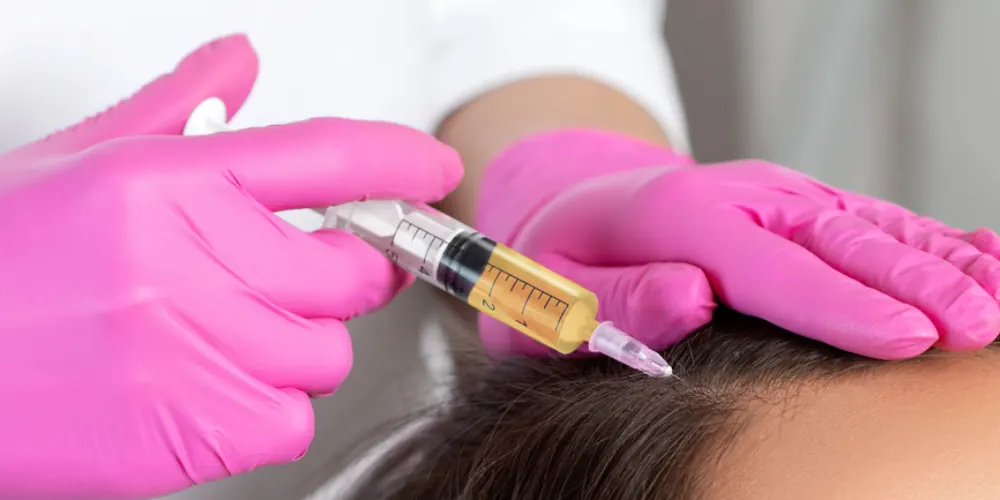
At Dr. Dhabhai’s Skin Clinic in Malviya Nagar, Jaipur, Dr. Ravindra Dhabhai looks closely at your scalp, the pattern of your hair loss, your medical history and any risk factors before recommending a plan. Depending on the diagnosis, treatment may include medical therapy, fixing nutritional deficiencies, PRP in suitable cases, or an assessment for a hair transplant.
Find out more about hair loss treatment in Jaipur or book a consultation for a personal evaluation.
Frequently Asked Questions
Does whey protein cause hair loss in men?
No direct cause-and-effect link has been proven. Family history, pattern hair loss, health issues and other gym products are usually more likely culprits.
Is whey isolate worse for hair than concentrate?
There’s no convincing clinical evidence that isolate leads to more hair loss than concentrate.
Does creatine raise DHT permanently?
No lasting increase has been shown. A 2025 clinical trial found no meaningful creatine-related change in DHT or hair measurements over 12 weeks.
Can I build muscle without whey?
Absolutely. Getting enough total protein and calories matters much more than any single supplement.
The Bottom Line
Whey isn’t a proven cause of hair loss, BCAAs aren’t proven DHT boosters, and the latest creatine research is reassuring. Real hair thinning deserves attention, but pointing fingers at one scoop of protein can pull your focus away from the bigger suspects, like genetics and nutritional gaps. Eat a balanced diet, choose your supplements wisely, and get ongoing hair fall checked by an expert instead of guessing.
PERSONAL CARE / MALVIYA NAGAR, JAIPUR
Find out what is causing your hair loss.
Bring your supplement list and describe when you first noticed shedding or thinning. Dr. Ravindra Dhabhai can assess your scalp and discuss suitable next steps.
1st Floor, Plot No. 32, Above ICICI Bank, Girdhar Marg, Malviya Nagar, Jaipur, Rajasthan 302017
CONTINUE EXPLORING
Explore your care options
For patient education. This article does not replace an individual diagnosis or prescription. Discuss testing and supplements with your clinician; treatment suitability and results vary.