

HAIR & SCALP / PATIENT GUIDE
Hair thinning: can it be reversed?
Spot the early signs, understand the cause and explore medical options for healthier hair.

THE SHORT ANSWER
The cause determines what can grow back.
Temporary shedding may recover, and early pattern hair loss may improve with treatment. Follicles destroyed by scarring cannot regrow. A diagnosis helps you choose the right next step.
You’ve noticed your parting looks a little wider than it used to, or your ponytail feels thinner in your hand. Naturally, the first question that comes to mind is: can hair thinning be reversed? In many cases, yes. But how much hair you can get back depends on what’s causing the loss, how long it has been going on, and how healthy your hair follicles still are.
Can Hair Thinning Be Reversed Fully?
Not all hair thinning is the same, and each type behaves differently.
Telogen effluvium is a temporary rise in hair shedding. It’s usually triggered by something your body went through, such as childbirth, a high fever, surgery, severe stress or sudden weight loss. Once the trigger settles, the shedding usually stops on its own. Recovery still takes time, though, often several months before your hair looks fuller again.
Androgenetic alopecia, also known as male or female pattern hair loss, develops slowly over years. Treatment can slow it down and, when started early, can help thicken hairs that have started to shrink. Expecting every lost hair to come back, however, isn’t realistic.
Scarring alopecia is the one to take most seriously. It permanently destroys hair follicles, so lost hair cannot grow back. If you notice pain, redness or scar-like patches on your scalp, get it checked by a dermatologist as soon as possible.
Hair Follicle Miniaturization
Hair follicle miniaturization is the key feature of pattern baldness. A healthy follicle normally produces a thick, pigmented hair called a terminal hair. In people who have inherited a sensitivity to hormones such as DHT (dihydrotestosterone), the growth phase of the hair cycle gradually gets shorter. Over time, each new hair grows back finer, shorter and lighter until it’s barely visible.
This is why thinning shows up long before a bald patch does. If you look at the scalp under magnification, you’ll often see thick and fine hairs growing side by side in the same area.
The good news is that miniaturized follicles can sometimes recover with the right treatment, especially when it’s started early. Advanced, long-standing hair loss is much harder to reverse. And despite what many ads claim, hair oils cannot regrow or revive damaged follicles.
Seven Early Signs of Thinning Hair
Don’t judge your hair by a single bad wash day. Look for signs that show up consistently over weeks:
- A wider parting: More scalp is visible along your parting line than before.
- A thinner ponytail: You need more loops of your hair tie to hold your ponytail in place.
- Receding temples: Your hairline slowly moves back at the temples, which is especially common in men.
- More scalp showing on top: Overhead lights or bright sunlight reveal more of your scalp at the crown or top of the head.
- Fine, short hairs: Hairs along your parting or hairline look thinner and weaker than the rest.
- More shedding when washing or brushing: You notice more hair than usual in your comb, on your pillow or clogging the shower drain.
- Less volume than before: Your hair feels flatter, doesn’t hold a style as well, or your scalp shows through in photos taken with a flash.
Male vs Female Diffuse Hair Loss: What’s Different?
In men, pattern hair loss usually starts with a receding hairline, thinning at the temples or a less dense crown. Some men, however, experience diffuse thinning across the top of the head without much change to the shape of their hairline.
In women, pattern hair loss typically shows up as a widening central parting and thinning over the top of the head, while the front hairline stays intact. Many women notice a loss of volume rather than any obvious bald spot.
It’s important to know that diffuse hair loss in women isn’t always female pattern hair loss. Iron deficiency, thyroid problems, a recent illness or certain medications can all cause similar thinning. Sometimes, temporary shedding and pattern hair loss happen at the same time, which is why a proper diagnosis matters.
How Doctors Determine the Cause of Diffuse Hair Loss
Before deciding how to stop hair thinning, a dermatologist will try to find out exactly what’s behind it. This usually involves:
- Timeline analysis: Has the thinning been gradual over years, or did it start suddenly a few months after an illness, childbirth or a stressful period?
- Pattern analysis: Thinning at the crown, a widening parting, smooth round bald patches or shedding all over the scalp each point towards different diagnoses.
- Scalp examination: The doctor may use a dermatoscope (trichoscopy) to look closely at the scalp and hair shafts for signs of miniaturization, inflammation or scarring. A gentle hair pull test can also show whether you’re actively shedding.
- Blood tests: Depending on your symptoms, the doctor may check iron levels (ferritin), thyroid function, vitamin D, vitamin B12 and a complete blood count. Women with irregular periods, acne or excess facial hair may also be tested for hormonal imbalances.
- Medication and health review: Recent illnesses, crash diets, new medications and changes in contraception can all affect hair growth.
- Scalp biopsy (if needed): If scarring alopecia is suspected or the diagnosis isn’t clear, a small sample of scalp skin may be examined to confirm the cause.
Medical Options for Treating and Reversing Thinning Hair
Topical Minoxidil: A Common First Option
Minoxidil is one of the most widely used and well-studied treatments for pattern hair loss in both men and women. Used consistently, it helps stimulate hair growth and maintain the density you already have.
Some people notice extra shedding in the first few weeks. This is usually temporary and happens as old hairs make way for new growth. Other possible side effects include scalp irritation and unwanted hair growth on the face. You’ll need to use it for six to twelve months to properly judge the results, and stopping treatment will gradually undo the benefits. Women who are pregnant, trying to conceive or breastfeeding should avoid it.
Finasteride: Prescription Treatment for Male Pattern Hair Loss
Finasteride is a prescription medicine that reduces the conversion of testosterone into DHT. In men with androgenetic alopecia, it can slow down further hair loss and help improve regrowth.
It doesn’t work for every cause of thinning, so a proper diagnosis comes first. Discuss possible side effects with your doctor, including sexual side effects and changes in mood. Finasteride is not approved for women and must not be used during pregnancy, although specialists sometimes prescribe it off-label for women who cannot become pregnant, such as after menopause.
PRP: Optional Clinic-Based Treatment
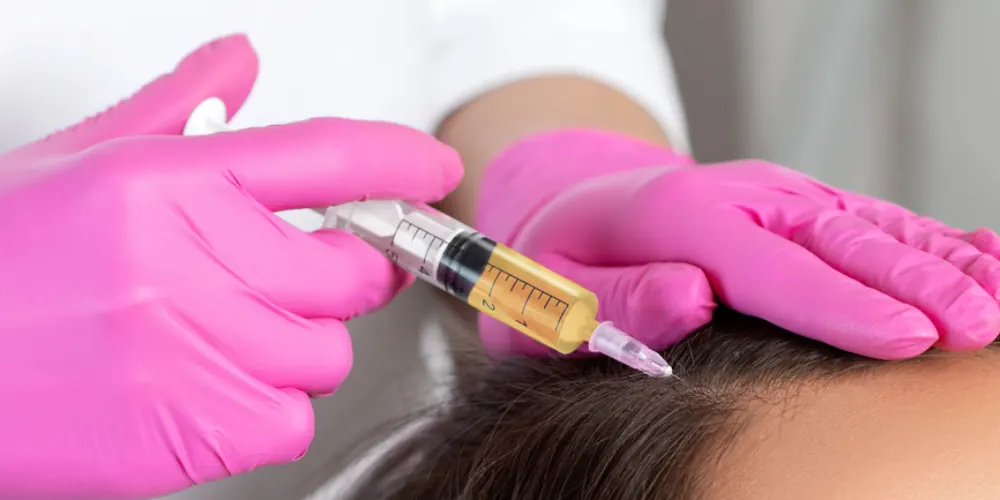
Platelet-rich plasma (PRP) therapy uses your own blood to support hair growth. A small amount of blood is drawn, spun in a machine to concentrate the platelets, and then injected into the thinning areas of the scalp. Platelets contain growth factors that may help strengthen weakened follicles.
PRP is usually done as a series of sessions about a month apart, followed by maintenance sessions every few months. Results vary from person to person, and it works best as an add-on to medical treatment rather than a replacement for it. It isn’t suitable for everyone, including people with certain blood disorders, so your dermatologist will assess whether it’s right for you.
American Academy of Dermatology: hair loss diagnosis and treatment
Hair Loss Prevention Plan: How to Stop Hair Thinning
- Track your hair. Take photos of your parting, temples and crown once a month in the same lighting. Comparing them over time makes changes much easier to spot than relying on memory.
- Get evaluated early. See a dermatologist if your thinning lasts more than a few weeks, appears in patches or comes with other scalp problems. Early treatment matters because follicles that have shrunk but are still working respond best.
- Stick with the right treatment. Use your hair loss treatment exactly as prescribed, and don’t give up after a few weeks. Hair grows slowly, and visible results take months.
- Fix the underlying problem. Eat a balanced diet with enough protein, and treat any nutritional or health issues your doctor finds. Avoid taking high-dose hair vitamins without testing first, as they won’t help if you aren’t deficient.
- Protect your hair from damage. Avoid tight hairstyles, harsh chemical treatments and frequent heat styling. These can cause breakage and hair loss of their own, although they don’t cause genetic miniaturization.
- Review your progress regularly. Follow-up visits every three to six months help your doctor check whether shedding has slowed, whether the treatment is working and whether anything needs to change.
When Is It Time to Visit a Dermatologist?
See a doctor promptly if you have sudden or patchy hair loss, scalp pain or redness, a shiny scar-like patch, or thinning that comes with other unexplained symptoms such as tiredness or weight changes. A receding hairline or widening parting is also worth checking early, before the loss becomes extensive.
At Dr. Dhabhai’s Skin Clinic in Jaipur, patients get a thorough assessment of their hair loss and a personalised treatment plan, with medical therapy and PRP where needed.
Frequently Asked Questions
Is it possible for thin hair to thicken naturally?
Yes, it can happen, especially when the hair loss was temporary and caused by an illness, stress or a nutritional problem. Genetic pattern thinning, however, usually needs medical treatment to see any meaningful improvement.
Is it possible to restore miniaturized hair follicles?
Some follicles can start producing thicker hair again if they’re treated correctly and early enough. Follicles that have been shrinking for a long time are less likely to respond. Follicles destroyed by scarring cannot be restored.
How long does it take for hair to regrow?
Hair regrowth is a slow process. It usually takes a few months for shedding to settle down, and around six to twelve months of consistent treatment before you see a noticeable difference in thickness.
Can hair oils reverse hair thinning?
No. Oils can condition your hair and make it look healthier, but they cannot regrow hair or revive miniaturized follicles.
Is hair thinning in women always caused by hormones?
Not always. Iron deficiency, thyroid problems, recent illness, stress and certain medications can all cause thinning, which is why blood tests and a proper examination are important.
PERSONAL CARE / MALVIYA NAGAR, JAIPUR
Understand your hair. Plan your next step.
Book an assessment at Dr. Dhabhai’s Skin Clinic in Jaipur to understand your hair loss and discuss a personalised treatment plan.
1st Floor, Plot No. 32, Above ICICI Bank, Girdhar Marg, Malviya Nagar, Jaipur, Rajasthan 302017
CONTINUE EXPLORING
Explore your care options


For patient education. This article cannot replace a personal assessment or prescription from a qualified medical professional. Treatment suitability and results vary. Do not start or stop a medicine without advice from your clinician.