

HAIR & SCALP / PATIENT GUIDE
Why Is My Hair Turning White So Early? Causes of Premature Greying, and Whether You Can Reverse It
Learn why hair can turn grey early, which nutrient deficiencies may be linked, and when to see a dermatologist about premature greying.

UNDERSTAND EARLY GREYING
Why hair loses its colour
Family history is common. Sudden changes or other symptoms can warrant a closer look.
THE SHORT ANSWER
The cause matters more than the colour.
Premature greying often runs in families. A clinician can check for an underlying condition or deficiency when your history suggests one.
Spotting a white hair at 22 is a bit of a shock. Spotting five more by the end of the year, when your mum and dad didn’t go grey until their forties, is usually when people start to worry.
The usual suspects are stress, late nights, or “some vitamin.” An aunt swears by amla oil. A friend tells you to start B12 tablets. Instagram has a dozen reels promising to turn your whites black again in 30 days.
So what’s really going on? And is there any way to undo it?
It depends on why your hair is losing its colour. Genes are a big part of the story, but low nutrient levels, oxidative stress and some health conditions can play a role too. Once you understand what’s happening inside the hair follicle, it’s much easier to tell which fixes might work and which are wishful thinking.
When Does Greying Count as “Premature”?
Q: How young is too young for white hair?
Everyone goes grey eventually. Doctors only call it premature greying (the medical term is premature canities) when it starts much earlier than expected.
What counts as “early” depends on your background. For people of Asian descent, including Indians, greying before about 25 is usually considered premature.
A handful of white strands doesn’t automatically mean something’s wrong. Plenty of perfectly healthy people simply inherit early greying.
It’s a different story if the white hairs are multiplying fast, or if you’re also noticing thinning, constant tiredness or other changes. That’s worth a closer look.
So What Makes Hair Go White Early?
Q: Why does black hair lose its colour?
Your hair colour comes from a pigment called melanin. It’s made by cells called melanocytes, which sit inside the hair follicle.
As a new strand grows, these cells pass melanin into it, and that’s what gives it colour. If they start making less melanin, the hair comes out grey. If they make almost none, or stop altogether, it comes out white.
A few different things can disrupt that process.
1. Genes (the usual culprit)
Did a parent or grandparent go white early? Then there’s a fair chance you’ve inherited the same pattern.
Your genes influence how well your melanocytes work, how long they stay active, and when pigment production starts to slow down. Genetic greying isn’t a sign that you’ve been eating badly or living unhealthily.
The not-so-good news is that no treatment has yet been reliably shown to permanently reverse inherited early greying.
2. Low vitamins and minerals
Some nutritional deficiencies have been linked with greying before your time.
Vitamin B12 stands out because your body needs it for healthy cells and for making DNA. Copper matters too, since the enzymes that build pigment depend on it. Iron, folate and vitamin D can also be relevant for some people.
That said, white hair on its own doesn’t prove you’re short on any of these.
3. Long-term stress
Stress gets blamed for almost every grey hair, but the link is messier than people assume.
Studies suggest the body’s stress pathways can affect pigment cells and the stem cells that keep them topped up. Even so, the evidence in humans doesn’t show that day-to-day stress is the main reason most people go grey early. Genetics usually explains more, though stress that drags on for a long time might add to the problem in people already prone to it.
4. Oxidative stress
Your cells naturally produce reactive oxygen species just by doing their everyday work. Trouble starts when these build up faster than your body can clear them. That imbalance is called oxidative stress.
Hair follicles are especially exposed to it, because making pigment involves oxidative reactions in the first place. Over the years, this damage can wear down melanocytes and slowly chip away at your hair colour.
5. Health conditions and smoking
Thyroid problems, some autoimmune conditions and trouble absorbing nutrients have all been connected with early greying. Observational studies have also tied smoking to premature greying.
None of this means everyone with white hair has a hidden illness. It’s just why a check-up can sometimes be worth it.
Hydrogen Peroxide and White Hair: What’s the Connection?
Q: Does your body really make hydrogen peroxide inside hair follicles?
It does, in small amounts. It’s a by-product of normal cell activity, including melanin production.
Usually, antioxidant enzymes like catalase break it down before it can do harm. But research has found that older and greying follicles may hold on to more hydrogen peroxide while having weaker antioxidant defences.
When that happens, the excess can get in the way of the enzymes that make melanin and may even damage the pigment cells. Put plainly, the follicle slowly gets worse at colouring your hair.
Still, hydrogen peroxide is only one piece of a complicated puzzle. Catalase shampoos, antioxidant oils and DIY remedies haven’t been clinically proven to bring back natural colour in any reliable way.
Which Vitamin Deficiency Is Linked to White Hair?
Q: Is low B12 to blame for early greying?
It can be one factor, but it’s far from the only one. When a dermatologist looks at nutrition, these are the usual ones on the list:
Nutrient | Why it matters for hair |
|---|---|
Vitamin B12 | Needed for DNA synthesis and healthy cell function |
Copper | Helps the enzymes that make melanin |
Iron | Supports normal cell processes and overall hair health |
Folate | Plays a part in DNA synthesis and cell division |
Vitamin D | May affect how follicles behave, though there’s little evidence it reverses greying |
You’re more likely to need your levels checked if you’re on a restrictive diet, have a condition that affects absorption, or feel tired all the time for no clear reason.
Q: If I start taking B12, will my white hair turn black?
Maybe not.
If tests confirm a deficiency and it’s part of why you’re greying, fixing it may help your follicles pigment normally again, and now and then some new hair grows in with colour.
But no supplement can reliably undo genetic greying or bring back pigment cells that are gone for good. And please don’t start high-dose vitamins or copper without getting tested first. Too much can actually hurt you.
Can Grey Hair Go Back to Black on Its Own?
Q: Can premature greying be reversed?
Occasionally. Not predictably.
It comes down to two things: whether the follicle still has working pigment cells, and whether whatever’s behind the greying can be fixed.
Some people whose greying was linked to a deficiency or a medical condition have seen improvement once that was treated. Researchers have also recorded the odd case of hair regaining colour after stress eased or after certain medicines. Interesting, yes. A dependable treatment, no.
For most people whose greying is genetic or age-related, the change tends to stick.
What Happens When Melanocytes Run Out?
Q: Why do some white hairs never get their colour back?
Melanocytes make the pigment. Melanocyte stem cells are the backup supply, restocking those pigment cells each time a hair starts a new growth cycle.
Over time, both can slow down, stop working properly, or simply run out. This is called melanocyte depletion.
If a follicle still has some working pigment cells, a bit of recovery is biologically possible. Once the stem-cell reserve is used up, though, getting natural colour back becomes very hard. That’s why treating a deficiency helps some people but can’t reliably turn back advanced or inherited greying.
As things stand, there’s no widely accepted treatment that can consistently regrow depleted melanocyte stem cells in the human scalp.
Treatments That Actually Make Sense for Early Greying
Q: Can a dermatologist do anything about early white hair?
The first job is figuring out whether something treatable is feeding into it. Depending on your symptoms and history, a dermatologist might:
- Look at your scalp and the pattern of your greying
- Ask about your family history and when the white hair first appeared
- Go over your diet, any medicines you take, and other symptoms
- Order tests for vitamin B12, thyroid function, blood counts or other nutrients if there’s a reason to
- Check for hair fall or scalp conditions happening alongside
From there, treatment might mean correcting a confirmed deficiency, getting a thyroid problem under control, or dealing with another underlying health issue. These steps can improve the overall health of your hair and may help in some cases. They can’t promise that the white hair you already have will turn black.
Q: What about anti-greying oils, shampoos and supplements?
There’s no solid clinical evidence that amla oil, onion juice, catalase shampoos or packaged anti-greying supplements consistently bring back natural colour.
Hair dye and henna will hide the grey, but they don’t change how much pigment your follicles make.
When to See a Dermatologist
A few white hairs are rarely anything urgent. It’s a good idea to book a visit, though, if your greying started unusually young, is spreading quickly, or comes with heavy hair fall, bald patches, tiredness or changes on your scalp.
At Dr. Dhabhai’s Skin Clinic in Malviya Nagar, Jaipur, Dr. Ravindra Dhabhai offers dermatologist-led hair and scalp evaluations. The focus is on finding out what’s behind the problem before suggesting any treatment.
If you’re going grey and also losing more hair than usual, a proper clinical check can help tell a purely cosmetic colour change apart from a medical hair-loss condition.
Quick Answers to Common Questions
Can stress turn your hair white overnight?
There’s no convincing proof that ordinary stress can whiten a whole head of hair in one night. Over a longer stretch, though, stress may affect the biology of pigmentation.
If I pluck a white hair, will more grow back?
No. Pulling one out won’t make the follicles around it start growing white hair. Plucking the same spot again and again can damage the follicle, though.
Does PRP reverse white hair?
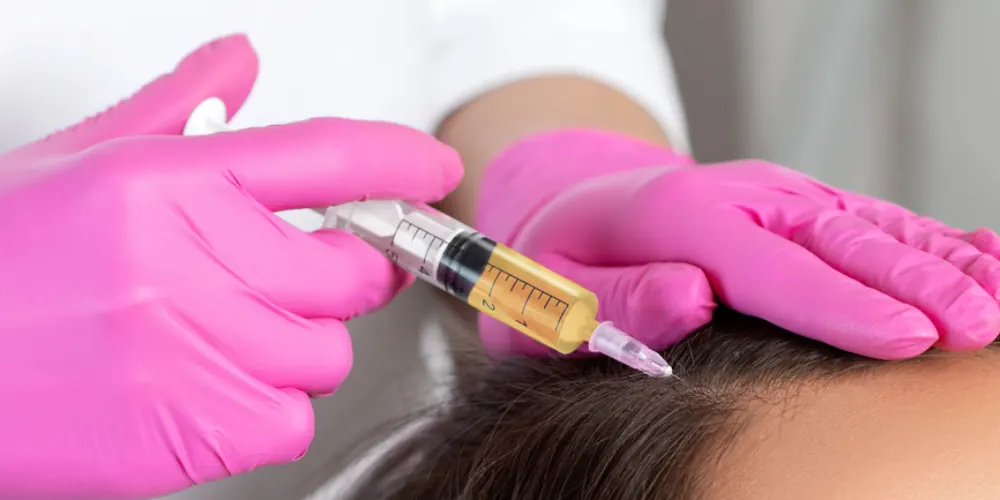
PRP is used for certain types of hair loss. It isn’t an established treatment for bringing colour back to grey hair.
Can white hair turn black again without dye?
It can happen now and then, mostly when there’s a reversible cause in the picture. It’s uncommon, and nobody can promise it.
Should I take copper for my white hair?
Only if a doctor finds you actually need it. Too much copper is toxic, and taking it when you’re not deficient hasn’t been shown to reverse greying.
The Bottom Line: Find Out Why Before You Try to Fix It
Going grey early isn’t always a sign that something’s wrong with your health. More often than not, it’s in your genes, with deficiencies, oxidative stress, smoking and some medical conditions sometimes adding to it.
Some cases do improve once the underlying problem is treated. But right now, no proven treatment can reliably and permanently turn genetically grey hair black again.
So rather than spending money on products that haven’t been properly tested, think about getting a professional opinion, especially if your greying started very early, is moving fast, or is showing up alongside hair loss.
If you’d like a dermatologist to take a look, read more abouthair loss treatment in Jaipur at Dr. Dhabhai’s Skin Clinic and talk through your hair and scalp concerns with Dr. Ravindra Dhabhai.
Medical disclaimer: This article is for general information only and isn’t a substitute for personal medical advice, diagnosis or treatment.
PERSONAL CARE / MALVIYA NAGAR, JAIPUR
Discuss your hair and scalp concerns.
Dr. Ravindra Dhabhai can assess changes in your hair or scalp and discuss suitable next steps.
1st Floor, Plot No. 32, Above ICICI Bank, Girdhar Marg, Malviya Nagar, Jaipur, Rajasthan 302017
CONTINUE EXPLORING
Explore your care options
For patient education. Discuss diagnosis and treatment with a qualified healthcare professional.