
HAIR RESTORATION / PATIENT GUIDE
Is a hair transplant safe?
Understand the risks, recovery and long-term results—so you can take the next step with better questions.

THE SHORT ANSWER
The right starting point? A proper diagnosis.
Hair transplantation can be a suitable option for carefully selected patients. It is still surgery: the risks, donor hair available, ongoing hair loss and aftercare all matter. Your consultation should help you understand what is realistic for you.
Finding a thinning crown or a changing hairline can leave you with a lot of questions. Is surgery safe? Does it hurt? Will the new hair last?
This guide brings the main considerations together in plain language. Use it to prepare for an individual assessment with a qualified dermatologist or hair transplant surgeon.
Is a hair transplant safe?
It can be a suitable option for carefully assessed patients. As long as a qualified medical doctor (dermatologist or plastic surgeon) is performing the surgery in a fully sterile, equipped clinical setting.
Here is what actually happens: The doctor takes healthy hair roots from the back or sides of your head. That area is called the donor area. Then they replant those roots into the spots where your hair has gone thin or bald.
The Garden Analogy: Think of it like moving plants from a lush, healthy corner of your garden to a patchy, dry spot. Same soil, same plants, just relocated. And because it is 100% your own biological hair, there is nothing fake going in. No plastic fibres. No foreign donor rejection.
But let’s be completely honest: It is still surgery. And every surgery has some degree of risk, even a minor one. “Safe” does not mean “nothing can ever go wrong.” Knowing what to expect keeps you calm and prepared.
What You’ll Notice in the First Few Days (Normal)
These are standard physiological reactions to minor surgery that resolve quickly:
- Forehead puffiness: Mild fluid swelling that drains down naturally in 3–5 days.
- Redness & tenderness: Scalp pinkness around the recipient micro-slits.
- Small crusts & scabs: Protective scabs forming over every graft site.
- Mild spotting or soreness: Minor tenderness controlled with simple painkillers.
- Numbness or tingling itch: Annoying nerve sensation that fades as skin heals.
- Temporary shedding: Shock loss of transplanted hair shafts (normal resetting).
Possible complications to discuss
Discuss these possible complications with your surgeon before deciding:
- Scalp infection: Infection is a possible surgical risk; your clinic should explain prevention and treatment.
- Folliculitis: Inflamed hair roots may need assessment and treatment.
- Visible dot marks or scarring: Small scars can remain at extraction sites.
- Patchy growth: Some grafts may not grow as expected.
- Compromised blood flow: Extremely rare skin tissue necrosis from poor technique or over-packing.
How likely any issue is really comes down to four clinical pillars: (1) Your overall health, (2) Scalp condition, (3) The training and skill of your surgeon, and (4) How strictly you follow aftercare rules once you head home.
How FUE hair transplantation works
FUE stands for Follicular Unit Extraction. Big medical name, very straightforward idea. In the older “strip” method (FUT), surgeons cut a long strip of skin from the back of your scalp. In FUE, the doctor picks out hair roots one small bunch at a time—kind of like picking individual grapes instead of cutting the whole vine. The appropriate technique depends on your donor hair and surgical plan.
The Clinical Check-Up
Before anything happens, the dermatologist examines your scalp with high-magnification trichoscopy. How are you losing hair? How thick is the donor hair at the back? Any underlying medical issues? Is your loss progressing? These answers shape your entire surgery.
Drawing Your Hairline
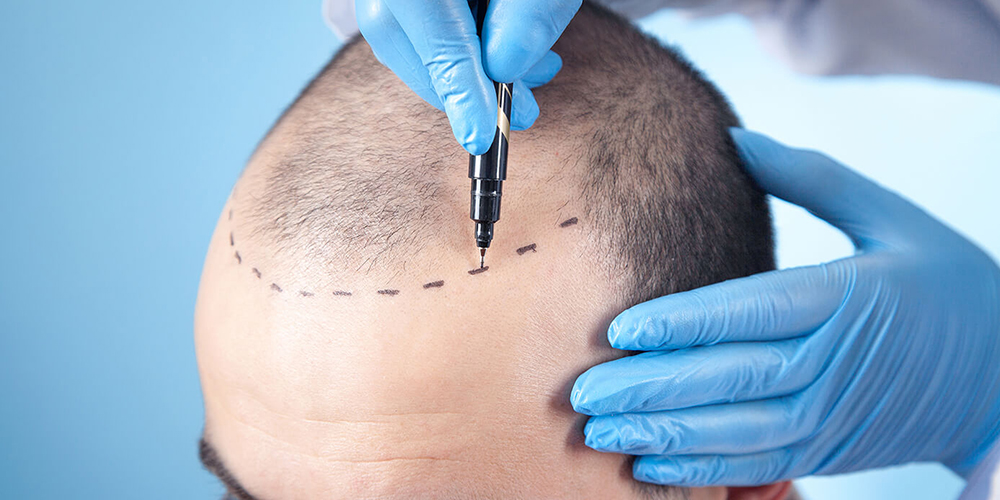
This part is more art than science. A 25-year-old and a 50-year-old shouldn’t get the same hairline. The doctor looks at your facial bone structure, age, and natural hair whorls to draw a natural-looking frame that looks distinctly like you.
Scalp Numbing
Your scalp receives local anaesthesia so the surgical field goes completely numb. You stay awake the whole time under local anaesthesia. Most patients listen to music, watch their favourite movies or shows, or chat casually with the team.
Extracting the Hair Roots
Using ultra-fine motorized micro-punches (0.75mm to 0.9mm), the dermatosurgeon gently removes individual follicular units (groups of 1, 2, 3, or 4 hairs) while taking great care to leave ample surrounding hair to preserve donor density.
Planting the Grafts
Extracted roots are sorted, inspected under stereomicroscopes, and kept hydrated in chilled solutions. Then tiny recipient incisions are made, placing each root at the precise angle and natural depth to mimic your hair’s original growth direction.
Heading Home with Care
You walk out the same evening with a light dressing and crystal-clear instructions: exactly how to sleep, medicines to take, how to wash your hair, what physical activities to avoid, and your scheduled follow-up visits.
The Honest Truth About FUE Scarring & Over-Harvesting
Now, one thing people don’t always tell you: FUE does not leave a long linear scar like the strip method. However, it is not 100% scar-free either. It leaves microscopic circular dot marks at the extraction sites. With normal short hair, these micro-dots are virtually impossible to see. With a zero skin-fade or razor shave, they may be visible.
And here is something vital: If an aggressive or untrained technician takes too much hair from the back in one sitting, that donor area can look permanently moth-eaten and thin. A conscientious dermatosurgeon plans for your future and protects your donor reserve.
What does a hair transplant feel like?
This is the #1 question patients ask during their initial consultation. And fair enough! Let’s break it down into the exact phases of the day:
The initial local anaesthetic injections sting. It feels like a quick pinch followed by a slight burning sensation. That lasts for just a couple of minutes before total numbness takes over.
Once numb, you feel vibration, pressure, or mild tugging, while the local anaesthetic is working. If you ever feel sensation returning, just let the team know—additional numbing medicine is applied immediately.
Once the numbness wears off in the evening, your scalp feels tight and sore—much like wearing a tight swimming cap or snug motorcycle helmet for several hours. Mild painkillers keep this comfortable.
While standard soreness is expected, contact your doctor right away if you experience:
How long do the results last?
Results can be long lasting, but a lifetime result cannot be guaranteed.
Here is why transplanted hair tends to stay: The most common type of hair loss, Androgenetic Alopecia (pattern baldness), is triggered when hair follicles sensitive to the hormone DHT (dihydrotestosterone) shrink and miniaturize. But have you ever noticed that even men with advanced baldness still retain a horseshoe ring of dense hair around the back and sides?
The Biological Law of Donor Dominance: Hair follicles in the occipital donor zone are genetically programmed to resist DHT. When moved to the frontal hairline or crown, they retain their genetic DHT resistance. Their characteristics generally remain after transplantation. That is why transplant results routinely last for decades.
The Part People Often Forget:
- Some transplanted hair can experience natural age-related thinning in your 60s and 70s.
- Your original native hair that was NOT transplanted continues its natural thinning process!
- Over 5 to 10 years, new bald patches can develop behind or around the restored hairline.
- Some patients benefit from medical maintenance or an eventual touch-up session years later.
Say you are 30 years old, and your front hairline is filled. Ten years later at age 40, your transplanted front hair is still thriving. However, your crown—which wasn’t treated—has now thinned out. That is not the transplant failing. That is your natural genetic hair loss marching on. This is why our dermatologists recommend medical therapy (such as minoxidil, finasteride, or GFC therapy) alongside surgery to protect your native hair.
What affects graft survival?
“Graft survival” is simply the percentage of transplanted hair roots that take root, vascularize, and produce healthy hair shafts. Outcomes vary between patients and cannot be guaranteed.
The 6 Crucial Factors That Dictate Graft Survival:
Clinical Warning: If any clinic or agent promises you “100% graft survival guaranteed,” treat that as an immediate red flag. A reputable doctor discusses realistic coverage, biological variance, and preserving your donor bank for the future.
Hair transplants and cancer: understanding the concern
FUE relocates your own hair follicles. It is different from a procedure that implants synthetic hair fibres. Questions about one procedure should not be assumed to apply to the other.
If you are concerned about cancer or have an unusual scalp lesion, discuss this with a dermatologist before considering treatment. A hair transplant consultation should include an assessment of your scalp health.
Any unusual scalp change deserves medical assessment, whether or not you have had a hair transplant. Always consult a dermatologist if you spot:
Your recovery and growth timeline
Here’s the plain truth: The surgery takes one day; the waiting is the hardest part. Hair growth follows human biology, not instant gratification. Knowing what is normal at each stage will save you countless sleepless nights.
Expect mild forehead swelling, redness, small scabs, and a sensitive scalp. The newly planted grafts are delicate right now. Do not scratch or rub. Wash your scalp strictly according to the gentle pour-over technique your doctor demonstrates. Be careful when pulling T-shirts over your head.
Micro-scabs loosen and fall away during gentle washing. Most patients return to their workplace and normal non-strenuous routines by day 7 to 10. Continue following your surgeon’s washing and activity instructions as the scalp heals.
This is when patients panic: the transplanted hair shafts begin falling out. Temporary shedding can be part of recovery. The follicle enters a temporary resting phase (telogen) before initiating fresh growth (anagen). Your surgeon can assess whether healing and shedding are progressing as expected. Contact your care team if you are unsure about your recovery.
Fresh baby hairs begin breaking through the scalp. They often appear fine, wispy, or slightly uneven at first. That is perfectly fine—each root awakens on its own independent timetable.
Now you begin seeing dramatic cosmetic transformation. Hair shafts thicken in diameter, gain natural pigment, and deliver visible, framing density. Friends and family start noticing the shift.
The result continues to mature; your individual timing can vary. The hair texture softens, blends seamlessly with surrounding follicles, and can be cut, styled, or washed just like your original hair. Crown restorations typically take up to 15–18 months to reach peak maturity.
Who may be a suitable candidate?
Not everyone with hair fall requires a transplant, and not everyone is an immediate candidate. Hair loss has many causes, including nutritional and autoimmune conditions. A diagnosis helps determine whether surgery is appropriate.
You Might Be a Good Candidate If:
- You have established Male or Female Pattern Hair Loss (Androgenetic Alopecia).
- You have a strong, dense donor zone at the back and sides of your head.
- Your expectations are realistic (restoring healthy coverage, not teenage density).
- You are in good general health with no active scalp inflammation.
- You are open to a long-term plan, including medical therapy to safeguard remaining hair.
You Should Pause or Avoid Surgery If:
- You have an active scalp infection, untreated folliculitis, or severe psoriasis.
- You have an uncontrolled systemic illness (unmanaged diabetes or heart disease).
- Your donor hair density is depleted, diffuse, or unviable.
- Your loss is caused by scarring alopecias (Lichen Planopilaris) or Alopecia Areata.
- Your hair loss is temporary Telogen Effluvium (e.g. post-dengue fever, thyroid imbalance, or low ferritin).
If you are 21 or 22 and losing hair rapidly, rushing into surgery is often a critical mistake. If a clinic drops your hairline low at 22, and your genetic baldness progresses over the next decade, you could end up at 32 with a strange island of transplanted hair at the front and total baldness behind it. In younger patients, medical treatment and monitoring may be considered to establish hair stability before surgery is considered.
Seven questions to ask your clinic
Selecting the right doctor is even more important than selecting the technique. Before you pay an advance or commit to any hair clinic in Jaipur or across India, ask these 7 vital questions:
Golden Rule: Never select a clinic simply because it is the cheapest or promises an impossible number of grafts. In dermatosurgery, cheap frequently turns out very expensive to repair later.
Frequently asked questions
Straightforward answers to the most frequent clinical concerns asked by our patients.
1. Is a hair transplant safe for everyone?
No. It may be suitable for patients who have been assessed by a qualified surgeon. But if you have certain health problems, an active scalp issue or not enough donor hair, it may not be right for you. A proper check-up comes first.
2. Will my new hair last for life?
Transplanted hair can be long lasting, but results vary. But age, your natural hair loss and your own body can change how your hair looks over the years.
3. Does it hurt during the surgery?
The first few injections sting. After that, your scalp is numb and you’ll mostly feel pressure, not pain. Expect some soreness for a few days after.
4. Can it give me cancer?
FUE uses your own hair follicles and differs from synthetic hair-fibre implants. Discuss any cancer concern or unusual scalp lesion with a dermatologist before considering surgery.
5. How much of the planted hair actually grows?
There is no single graft-survival percentage that can be promised to everyone. Your result depends on the surgeon, your donor hair, how the grafts are handled, your health and your aftercare.
6. Will the new hair fall out?
Temporary shedding can occur in the first weeks after surgery. Growth and long-term density vary; your natural hair may continue to thin. Ask your surgeon what to expect and when to arrange a review.
7. When will I see results?
You’ll usually see some new hair at around three to four months. It gets much better by six to nine months. The full result can take 10 to 18 months.
ABOUT THE EDITORIAL TEAM
Dr. Dhabhai Editorial Team
Patient education from Dr. Dhabhai’s Skin Clinic in Jaipur. Our blog helps you understand treatment options and prepare for a conversation with your doctor.
PERSONAL CARE / MALVIYA NAGAR, JAIPUR
Your questions deserve personal answers.
A clinical consultation can help establish why you are losing hair and whether surgery or medical treatment is appropriate.
Above ICICI Bank, 1st Floor, Girdhar Marg,
Malviya Nagar, Jaipur
CONTINUE EXPLORING
Explore your care options


For patient education. This article cannot replace an in-person assessment or a treatment plan from a qualified medical professional. Your surgeon’s individual instructions take priority during recovery.