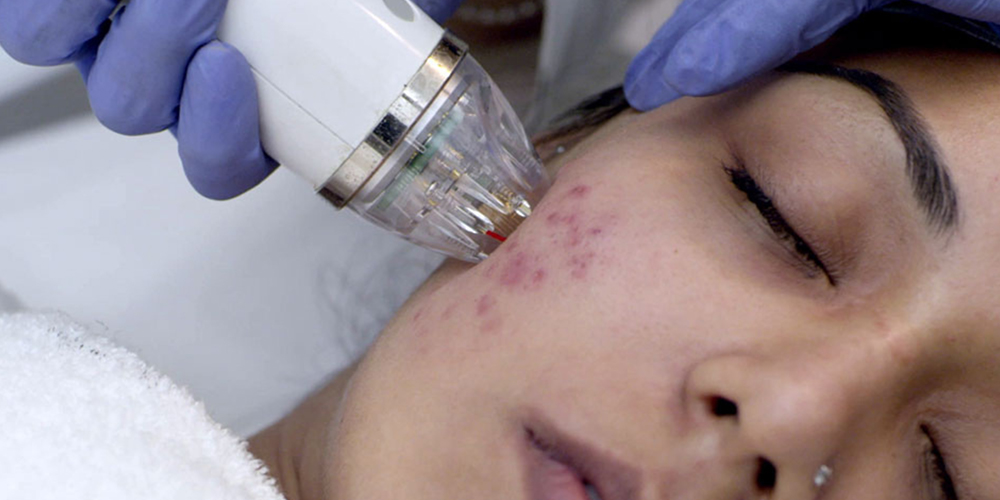
Count the hours. Twenty minutes shaving before work. An hour at the salon every third week. The last-minute threading appointment before a wedding you forgot about. Then the regrowth starts, and the whole cycle resets.
Laser hair reduction is designed to break that loop.
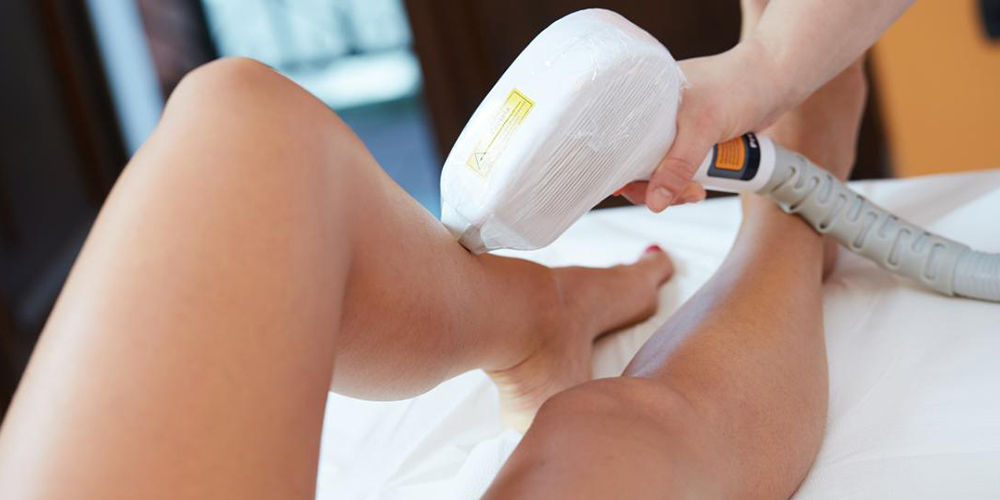
At Dr. Dhabhai Skin Clinic, we offer laser hair removal in Jaipur for both men and women who want fewer razors, fewer salon visits, and a lasting reduction in unwanted hair. Treatment is planned by a dermatologist after assessing your skin and hair — not run on a fixed setting for every patient who walks in.
Every conventional method has a catch.
Shaving works, but only for a day or two — and brings cuts, stubble, and darkening at the follicle. Waxing lasts longer but requires regrowth before the next session, so you spend weeks waiting with hair you didn’t want in the first place. Threading is precise, but practical only for eyebrows, upper lip, and chin.
None of them reduce hair. They only remove what’s already there.
Laser works differently: it targets the follicle itself, which is why hair tends to grow back finer and slower over a course of sessions.
A realistic note: outcomes differ from person to person. Hair thickness, hair colour, skin type, hormonal status, and the area being treated all influence how much reduction you see and how many sessions it takes. Your dermatologist will tell you what to expect for your case rather than quoting a standard promise.
It comes down to pigment.
The laser emits a specific wavelength of light that is absorbed by melanin in the hair shaft. That light energy converts to heat, and the heat travels down to the follicle — the structure responsible for producing new hair. Damage the follicle enough, and its ability to regrow hair is reduced.
Hair doesn’t grow on a shared schedule. At any moment, some follicles are in the active growth phase (anagen), while others are resting or shedding. Laser energy works best on hair in that active phase, because that’s when the shaft is firmly connected to the follicle. The hairs that were dormant on the day of your session simply weren’t reachable — they need their own turn.
So treatment is spaced out over months, catching different batches of follicles as they cycle into growth. Most patients notice the change gradually: growth slows, the texture becomes finer, and bare patches start to appear between sessions.
Every case at our clinic starts with an assessment, not a machine. Before any laser session is scheduled, the dermatologist examines your skin and hair to decide whether laser is appropriate for you and which parameters suit you.
Only after that does a personalised laser hair reduction plan get recommended — including the number of sessions, the interval between them, and the settings appropriate for your skin.
Laser hair reduction can be performed almost anywhere hair grows, though suitability for each area is confirmed during consultation.
Upper lip · chin · jawline · side locks · full face · underarms · arms · forearms · legs · bikini line · abdomen · lower back · full body
Beard line and neck shaping · chest · abdomen · shoulders · upper and lower back · arms · legs · underarms · full body
Facial hair is the category patients find hardest to live with — partly because the maintenance is relentless.
Threading every ten days. Concealing shadow on the upper lip. Skin that stays irritated because it never gets a break between appointments.
Facial laser hair removal in Jaipur at our clinic may be considered for the upper lip, chin, cheeks, jawline, side locks, and neck. Facial skin is thinner and more reactive than body skin, so conservative, carefully chosen settings matter more here than anywhere else.
Important for women: A sudden rise in facial hair can point to hormonal causes like PCOS. Your dermatologist evaluates the medical cause alongside laser — otherwise regrowth is far more likely.
If you’re already removing hair from four or five areas on a rotating schedule, full-body laser is usually the more sensible route.
A full body laser hair removal plan in Jaipur can combine arms, legs, underarms, abdomen, back, bikini area, and face — customised to what you actually want treated, not a fixed package.
Sessions naturally run longer than single-area treatments, and the total timeline depends on which areas are included and how your hair responds. Your dermatologist will map this out during planning so you know what each visit involves.
There’s no honest single answer, and anyone who quotes you an exact figure before examining your skin is guessing.
Because laser only affects follicles in their active growth phase, a course of treatments is standard. The precise number depends on:
After watching your growth pattern across initial treatments, your dermatologist can give you a far more accurate schedule.
Tolerable for most people. Not painless. Sensation is a hot pinprick lasting a fraction of a second per pulse. Tell the doctor beforehand so energy settings can be adjusted for your comfort.
Never discontinue prescribed medication without consulting your doctor.
Aftercare is adjusted for facial vs body treatment.
Most adults with unwanted facial or body hair can be considered — but suitability is decided individually, never assumed.
A consultation settles the question quickly, and it’s the responsible starting point for any laser treatment.
The clinic you pick matters more than the machine it owns. Laser settings that suit one skin type can be wrong for another, and the judgement behind those settings is what separates a good outcome from a poor one.
Cost is decided by scope, not by a fixed rate card.
An upper-lip treatment and a full-body course sit at completely different ends of that range — which is why an accurate figure comes after your area and requirements are assessed, not before. You’ll be given a clear estimate at consultation, before treatment begins.
The accurate term is long-term hair reduction, not permanent removal. Many patients see a substantial and lasting drop in growth, with remaining hair coming in finer and sparser. Occasional maintenance sessions may still be needed, particularly where hormonal factors are involved.
Gradually, over a course of sessions rather than after one. Typically growth slows first, then thins, then becomes patchy in treated areas.
Yes. Upper lip, chin, jawline, cheeks, and side locks are commonly treated when the dermatologist confirms it’s appropriate for your skin.
Regularly — most often for beard-line and neck shaping, chest, back, shoulders, arms, and legs.
No. Waxing, threading, and plucking remove hair from the follicle, which is exactly what the laser needs to find. Shaving is the recommended option between appointments.
Often yes, but only after assessment. Sensitive and reactive skin usually calls for more conservative settings and closer monitoring.
Less effectively. The laser targets pigment, so dark hair responds best. Very light, red, or grey hair has minimal melanin and typically shows limited results — your dermatologist will tell you honestly if this applies to you.
It depends on the treatment area and number of sessions. A personalised estimate is provided at consultation.
From a few minutes for the upper lip to well over an hour for full body.
Generally none. Temporary redness or mild sensitivity is usual and settles quickly; most patients return to normal activity the same day.
The next salon appointment is already on your calendar. This is the alternative.
Book a consultation at Dr. Dhabhai Skin Clinic and get a clear, dermatologist-led assessment of your skin type, hair growth pattern, suitable treatment areas, expected number of sessions, and cost — before you commit to anything.